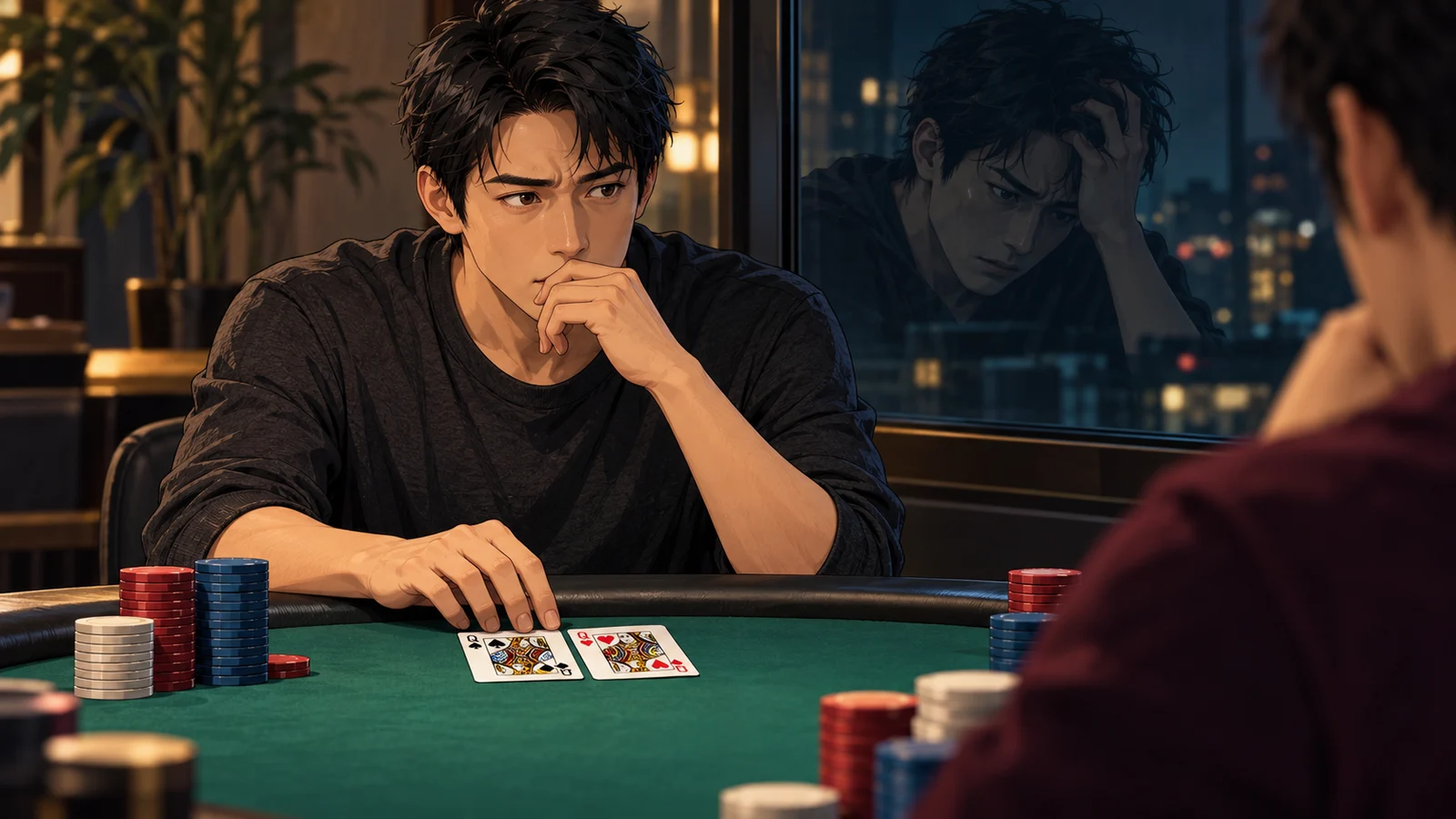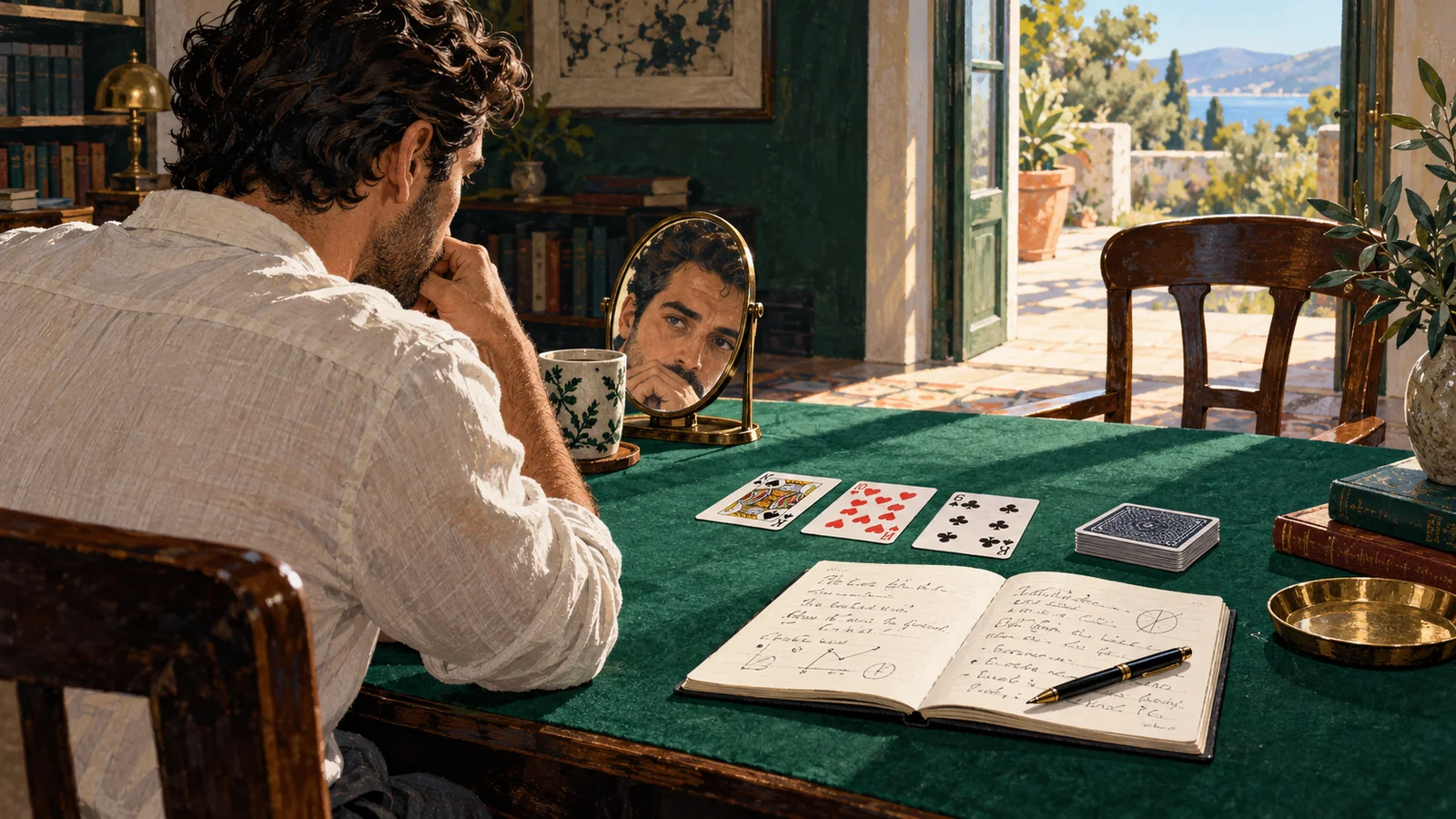
Some people leave poker not because they cannot accept losing a hand.
They leave because they start wondering: did I sit down to play a game, or walk into somebody else's script?
That doubt cuts deeper than a river suckout. Variance can be understood. Once trust starts slipping, even the memories feel different.
But there is another trap. Every cooler becomes a signal. Every strange call acquires a sinister explanation. The verdict arrives before the hand review has even begun.
There is a path between dismissing those fears and letting them explain everything.
Don't excuse cheating. Don't let suspicion do your hand review.
1. Players Have Reasons to Worry
In October 2026, allegations surrounding Britney Jing expanded from a staking dispute to questions about shared financial interests and possible collusion. Poker.org reported on October 5 that Hustler Casino Live was reviewing the allegations and that she would take a break from the stream. HCL said it would not reach conclusions before completing that review.
A review and a hiatus are not a finding of cheating. A payment disagreement, a conflict of interest and collusion are different questions, not interchangeable proof.
Online poker faces its own trust problems. On September 17, a video appearing to show real-time strategy assistance prompted controversy. ACR said using such assistance during a live hand violated its rules and announced an investigation. That describes the response reported at the time, not a final disciplinary outcome.
These cases involve different evidence. But they raise a shared concern: what happens to fair competition when information, tools or financial relationships are not on equal terms?
Players deserve a serious response, not a casual “you're imagining things.”
2. Cheating Exists. That Does Not Explain This Hand.
Concern is not yet evidence.
Between “cheating has happened in poker” and “someone cheated in this hand,” there must be a specific, verifiable connection. Feeling certain cannot supply it.
A baffling call might reflect a different range assessment. It might simply be a bad call. An opponent can make a mistake and still get a good result.
The reverse also holds. A strategically reasonable hand does not certify that an entire game was fair.
Decision quality and game integrity are separate questions.
The tempting shortcut is to turn “I cannot explain this” into “only cheating can explain this.” It skips a lot of work: reconstructing the action, checking the stacks, understanding the opponent, or admitting that something remains unclear.
Suspicion can tell you to stop. It cannot fill in the missing evidence.
3. Play Long Enough, and Some Hands Will Feel Unreal
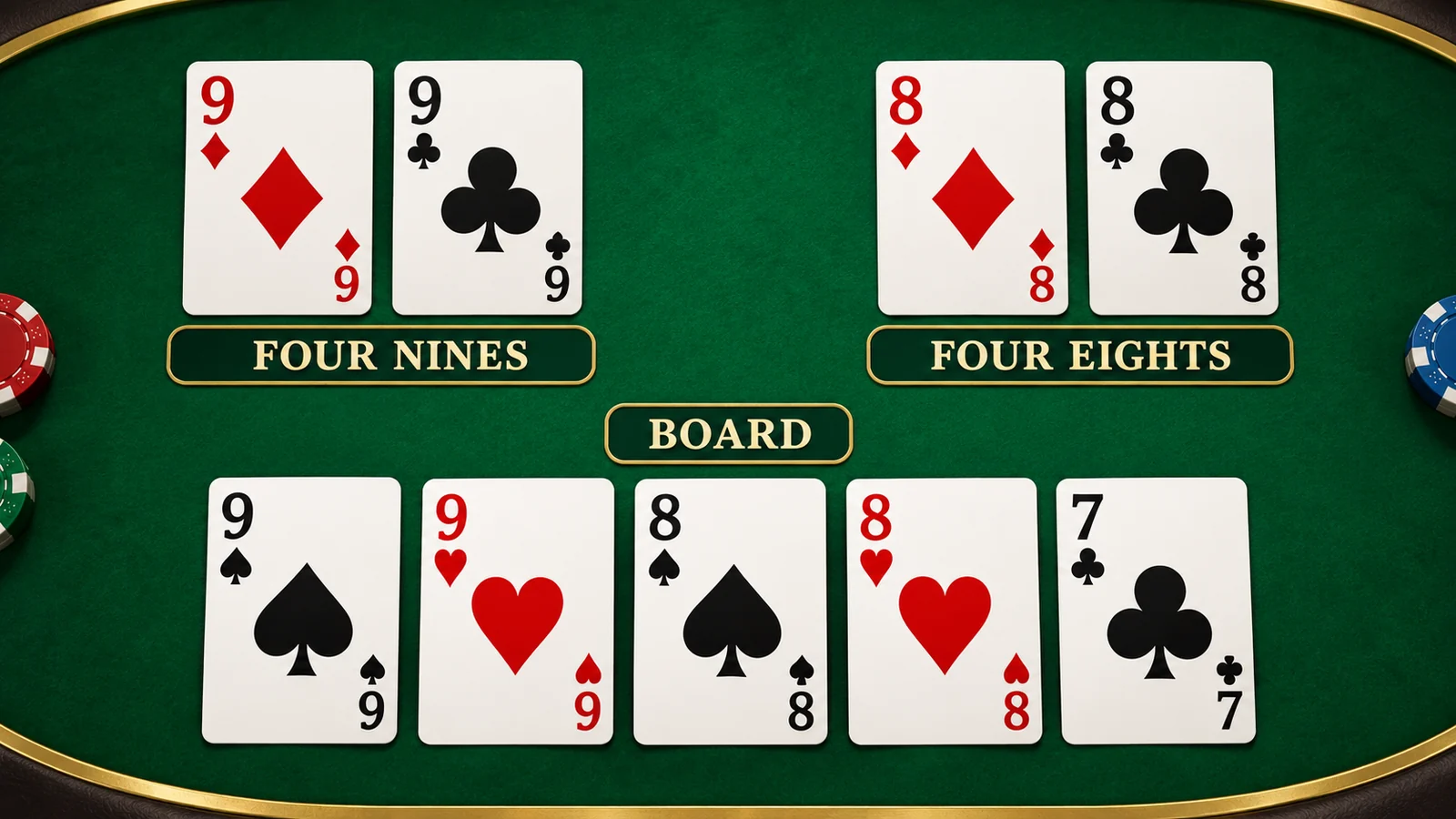
Consider a fictional example, not an allegation about a real game. You commit with a very strong hand and run into an even stronger one. In another hand, you are far ahead when the chips go in, only for the final card to change everything.
Even four of a kind can run into a royal flush.
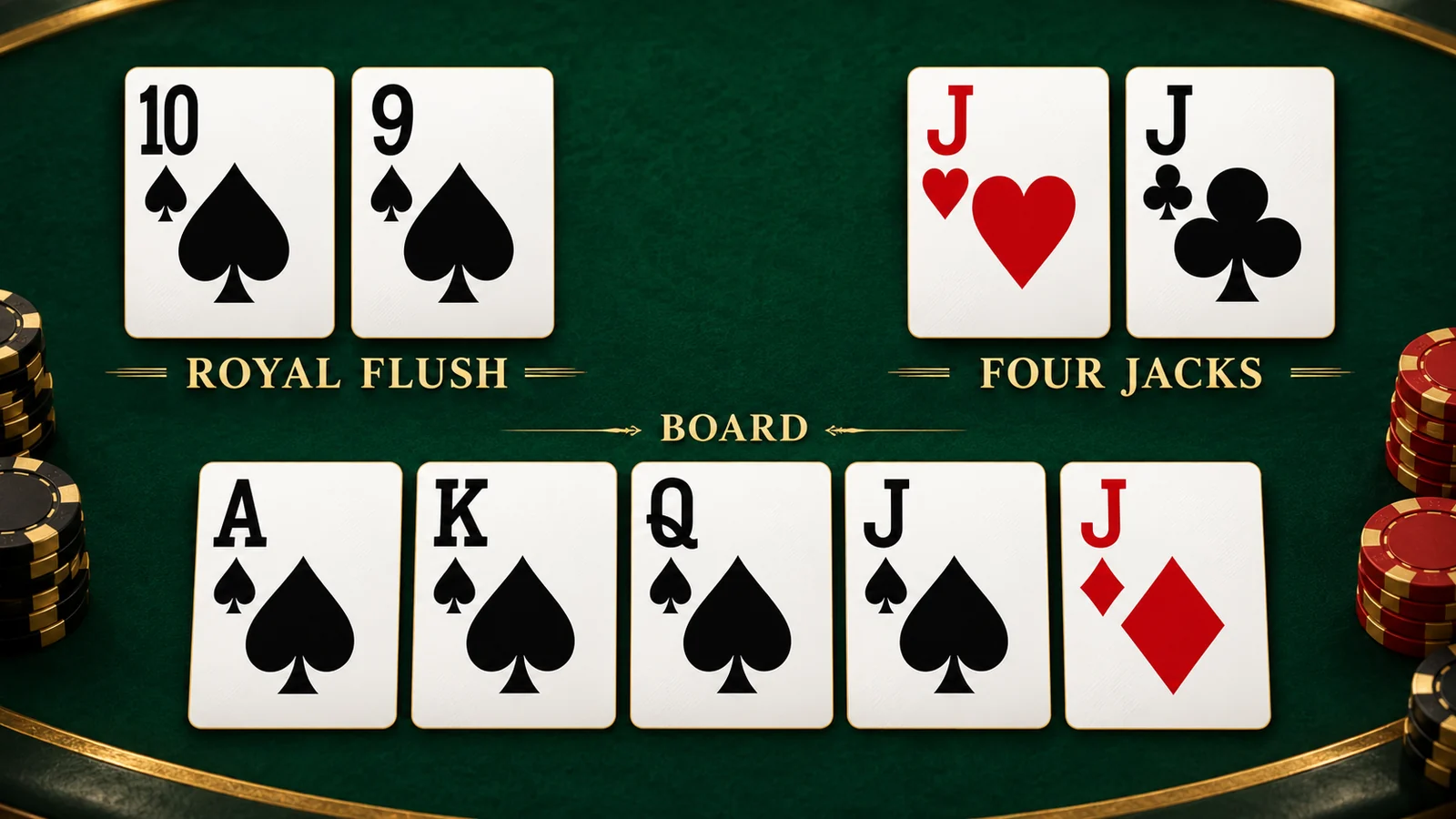
Both hand diagrams are constructed comparisons, unrelated to the news events above. They show showdown results, not recommended betting decisions or evidence of cheating.
When these arrive close together, “why does this keep happening to me?” is an understandable reaction.
The feeling is real. It is not a probability calculation.
Suppose you have a 90% chance of winning an all-in given both revealed hands. The other 10% is not decorative. Losing remains possible. It does not arrive neatly once every ten trials, and it does not make you due to win the next one.
More hands generally mean more opportunities to encounter something unusual. And when “unusual” can include many different patterns chosen after the fact, the tiny probability of one exact outcome is not the probability of seeing anything strange all evening.
Rare does not mean impossible. Painful does not mean manipulated. Neither point proves a game safe. They only explain why shock alone cannot establish the cause.
Two questions are more useful: was this collision reasonably avoidable? And did I add unnecessary risk before or after it?
4. Before Asking Who Did This, Ask What Changed
Sometimes, replaying the action turns an initial suspicion into a more precise problem:
“The river wasn't where my decision went wrong. On the turn, I had already committed too much against a range I never properly tested.”
Sometimes the opposite happens. The decision holds up. The result was simply bad.
The purpose of review is not to guarantee that you find your own mistake. It is to give your conclusion a basis other than how much the hand hurt.
Start with three layers:
- What I know: positions, effective stacks, board cards, action order and sizes.
- What I assumed: the opponent's possible hands, the evidence behind that range, and anything missing.
- What I brought to the decision: fatigue, urgency to recover, or the need to prove “he can't have it again.”
Then hide the result for a moment. Return to the decision with only the information available then. Does the choice still make sense?
A strong hand shown at showdown cannot erase every plausible bluff from the earlier range. A weak hand cannot retroactively justify every call you could have made.
The result can add information. It cannot travel back in time and make the decision for you.
5. Accountability Is Not an Excuse for Somebody Else
This distinction matters.
Finding that you called too wide does not establish that nobody colluded. Finding no decision error does not establish that somebody did. Neither conclusion gets to outrun the evidence.
A hand can contain your strategic mistake and an unresolved integrity concern at the same time. One calls for study. The other calls for evidence and independent investigation. They do not cancel each other out.
If procedures, undisclosed financial relationships or rule violations give you reason for concern, pause participation. Preserve lawfully obtained original hand histories, times and communications, and report the issue to the operator. Do not keep taking risks to catch someone in the act. Do not turn an unverified suspicion into a public accusation.
Establishing cheating requires evidence. Choosing not to join a game that makes you uncomfortable does not require winning a courtroom argument first.
You can take responsibility for your decisions without taking responsibility for someone else's dishonesty.
6. We Need a Mirror, Not Another Judge
This is part of why we build ZenPoker: to help turn “that session felt wrong” into specific questions that can be checked, discussed and worked on.
Not to have AI identify a villain from one hand. Not to insist that every review must uncover a fault in the person asking.
It should help reconstruct the action, examine ranges and prices, flag missing information, and notice whether emotion changed the question. AI can miscalculate, misremember and misread. Important conclusions still need checking. Hand analysis cannot replace a security investigation or establish cheating from a few hands.
- GTOThe skeleton
- Establish a strategic baseline.
- ExploitThe blade
- Adjust to opponent evidence.
- AwarenessThe spirit
- See what drives your decisions.
Use structure to examine your choices, evidence to constrain judgments about others, and enough honesty to say “we don't know yet.” This is study after the hand, not real-time decision assistance during play.
Try one small exercise in your next review: hide the showdown, write down why you made the key decision, and name one new piece of evidence that would change your mind.
If that is difficult, you have found something worth studying. If the reasoning still holds, you are allowed to accept a bad result without inventing a charge against yourself.
7. Loving the Game Does Not Mean Staying at Every Table
In the preface to The Life of Michelangelo, Romain Rolland wrote, in translation:
There is only one heroism in the world: to see the world as it is, and to love it.
Applied to poker, we would read that as seeing variance, conflicting interests and genuine unfairness clearly, while still valuing what deserves to be valued: precise strategy, honest judgment, competition between fair opponents, and the moment you notice an old emotional pattern no longer making the decision for you.
But that affection does not oblige you to remain seated.
Leaving an unfair game is not betraying poker. Taking a break, or stopping entirely, does not require defending your credentials as a “real” enthusiast.
What we love is a game worth participating in, not every invitation to play.
See others' failures without losing your boundaries. See your own without giving up on growth.
Leave the table that deserves leaving. Question what deserves questioning. And keep working on what is genuinely yours to change.