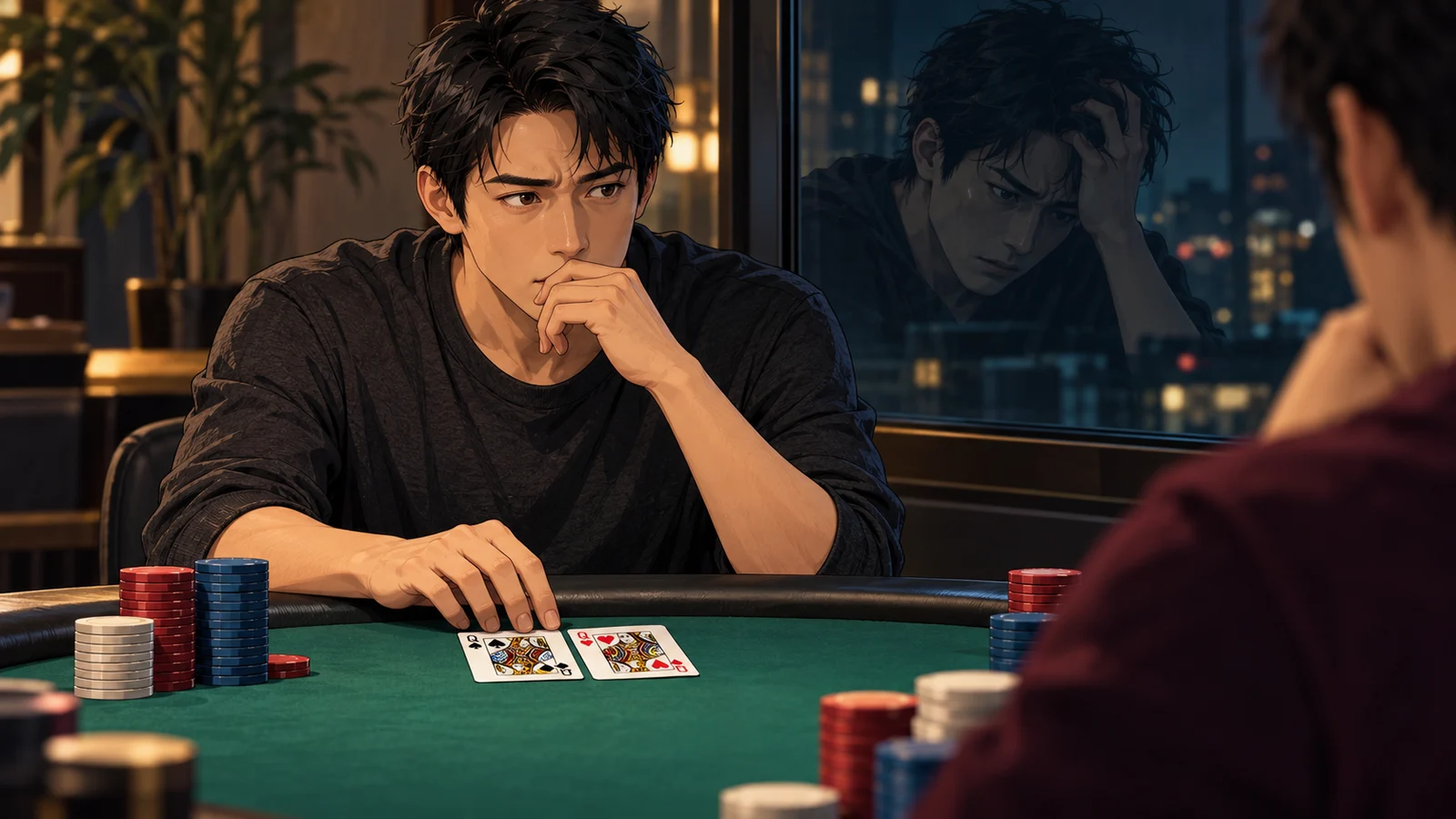
I had a monster. My first concern was: what if everyone folds?
This was a hand I played with pocket queens. I flopped top set and eventually won the pot. But during the review, what caught my attention was why I had declined to raise on two consecutive streets:
I was afraid a raise would scare them off. I wanted to keep more people in.
It sounds reasonable. That is precisely what makes it so easy to keep waiting.
Based on a real hand, presented in demonstration points. Opponents are identified by position.
I Won, but I Kept Waiting
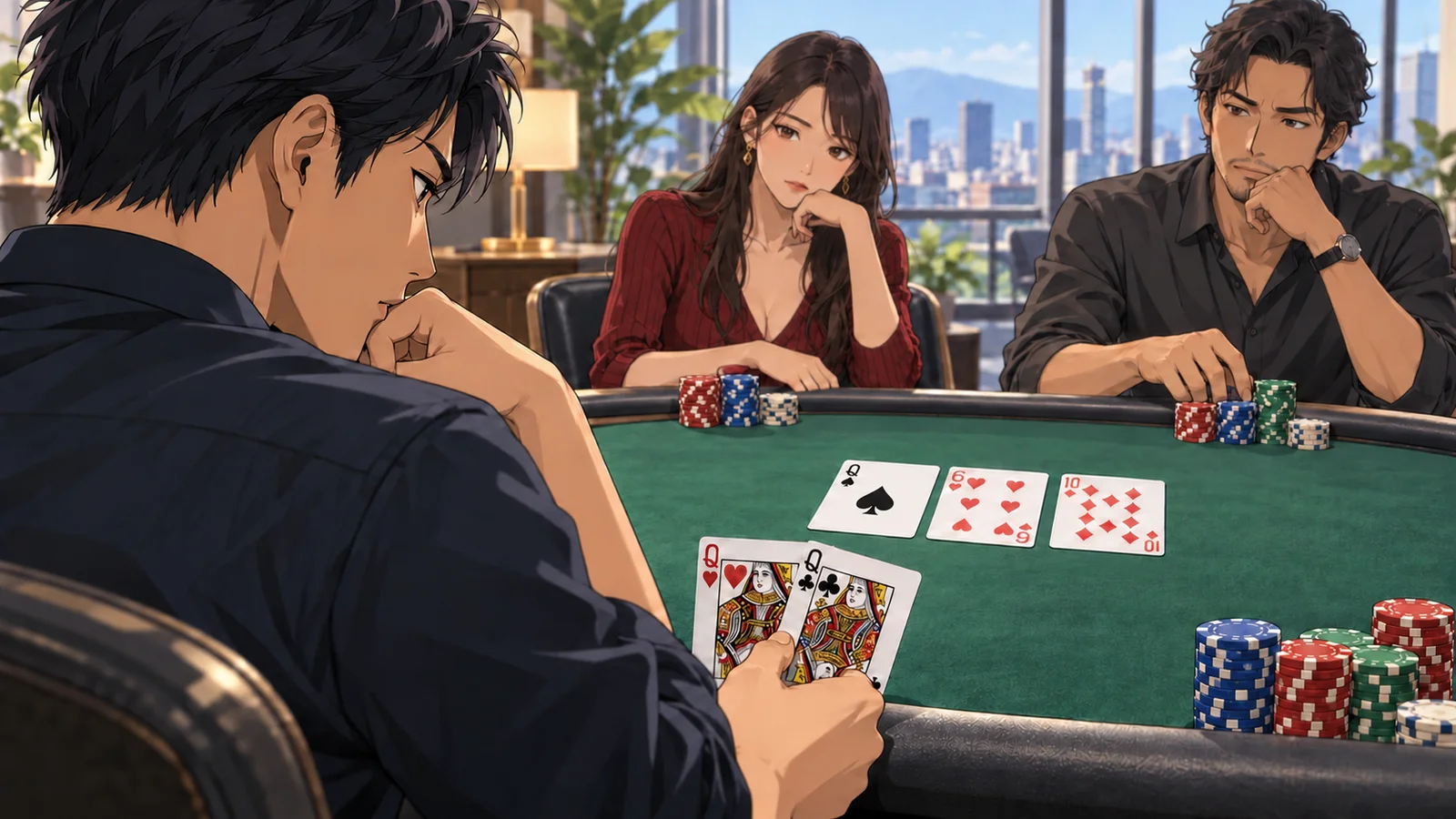
Eight-handed, with blinds of 5/10, I held Q♥ Q♣ in UTG1 with a stack of 7,000 demonstration points. I opened to 120. The button, small blind, and big blind called, making the pot 480.
The flop came Q♠ 6♥ T♦. I had the current nuts. The blinds and I checked. The button bet 260, the small blind called, and the big blind folded. I called too.
On the 9♥ turn, the small blind and I checked again. The button bet 500, the small blind called, and I called. The pot reached 2,760.
The river was the 8♣. Everyone checked. At showdown, the button revealed 66, the small blind mucked, and I won.
Judged by the result, it was a comfortable win. Looking at the decisions, I let others set the price on both streets and never raised for value.
I kept my opponents in. I also left them in charge of how much the pot grew.
Why Can Air Feel Easier to Bet?
A familiar contradiction appears at the table: some players can fire multiple barrels with nothing, yet become cautious as soon as they have a very strong hand.
With air, folding means accepting that this hand is over. Frustration, the desire to prove a read, or simply wanting the opponent to fold can drive the next barrel.
With a monster, the mind can start counting the reward early. A rare big hand has arrived; surely we must not scare anyone away. "How do I get the best value?" quietly becomes "How do I keep everyone in?"
There is also the attraction of playing cleverly. A successful bluff feels impressive. So does springing a trap. Betting for value can seem ordinary by comparison.
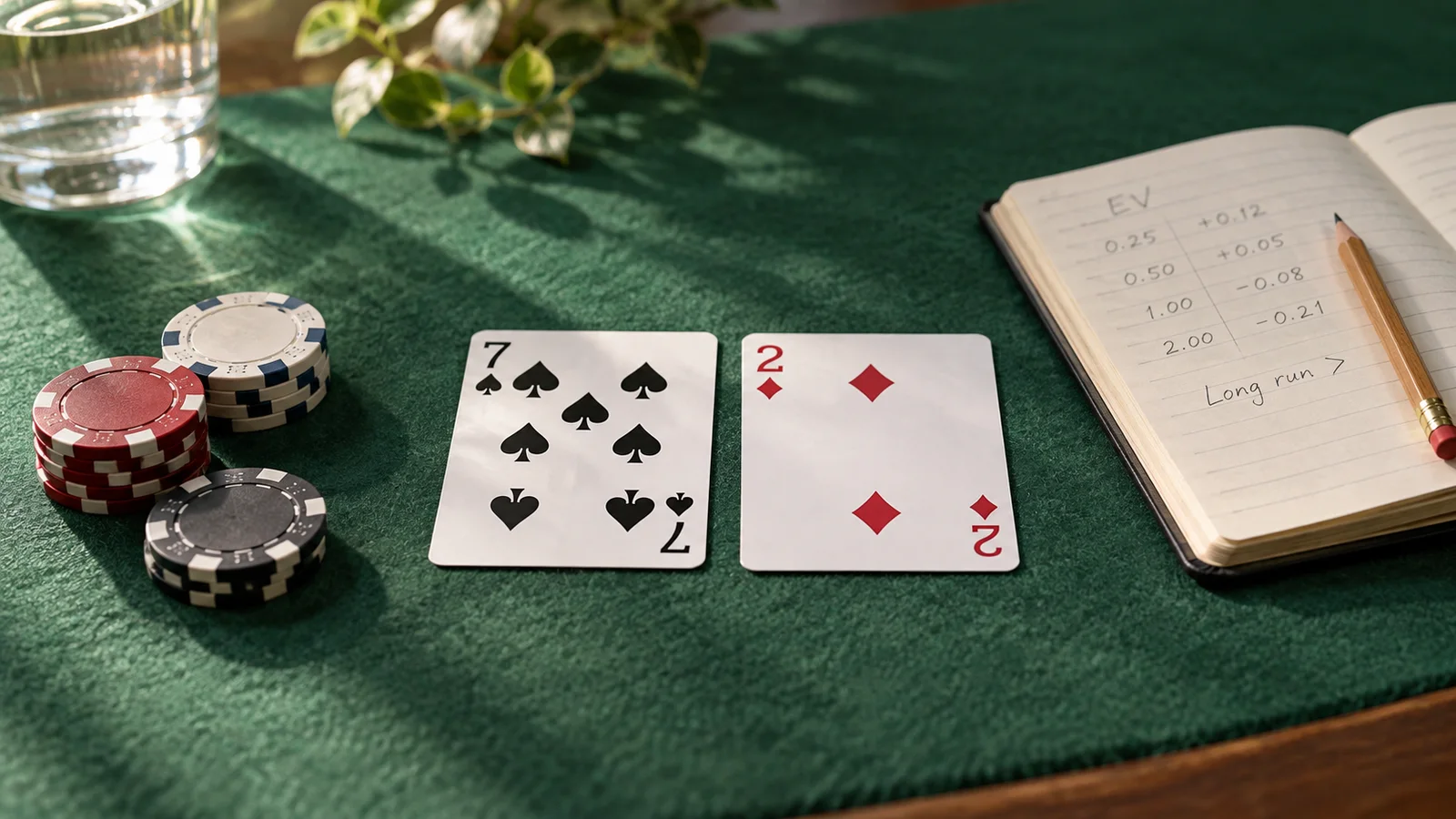
A fold is visible immediately. Missed value never sends you a bill.
Bet and watch someone fold, and regret comes easily. Slow-play and win, and it is much harder to ask whether another line might have been better.
The Next Card Can Close the Value Window
The important detail on this flop was a bet followed by a call. Both opponents had already shown an interest in continuing.
My queens blocked plenty of Qx, but they did not block lower sets or the main straight draws. That made it worth comparing two options: keep more of their ranges in, or raise for value against hands willing to pay.
The 9♥ turn completed straights for KJ and J8. I no longer had the nuts. On the 8♣ river, any jack made a straight, while worse hands that had been willing to pay might now stop putting chips in.
The next card can change both who is ahead and who is still willing to pay.
Missing one street of value can also reduce the size of later bets. Getting outdrawn is one cost of slow-playing; failing to grow the pot is another. Andrew Brokos explores those tradeoffs in more detail here.
Seeing 66 at showdown does not mean I knew the button's cards earlier. Nor does it prove that a raise would have won an entire stack. We can examine the information available at the time without inventing an exact amount of missed value.
Slow-Play with a Plan
Checking the flop had reasons behind it: retain bluffs and give the button room to bet. Against someone who keeps attacking, inducing can be worth more than betting yourself.
The important part is having a plan to collect value.
Before deciding to wait again, ask:
- Which worse hands can call my bet or raise?
- Which future cards might stop those hands from paying?
- If I only call now, what will make me start building the pot?
"They might fold" is information to consider when choosing a size. It should not automatically end the case for a value bet. Opponents are allowed to fold. We cannot demand both more chips from worse hands and everyone's continued participation.
- GTOThe skeleton
- Establish a strategic baseline.
- ExploitThe blade
- Adjust to opponent evidence.
- AwarenessThe spirit
- See what drives your decisions.
Game theory optimal (GTO) thinking provides a baseline. Opponent tendencies guide adjustments. Awareness helps us notice when anxiety starts making the decision for us.
With air, allow yourself to fold. With a strong hand, allow your opponents to fold too.
You do not need to keep everyone in. You need to make an informed choice while the value is still there.