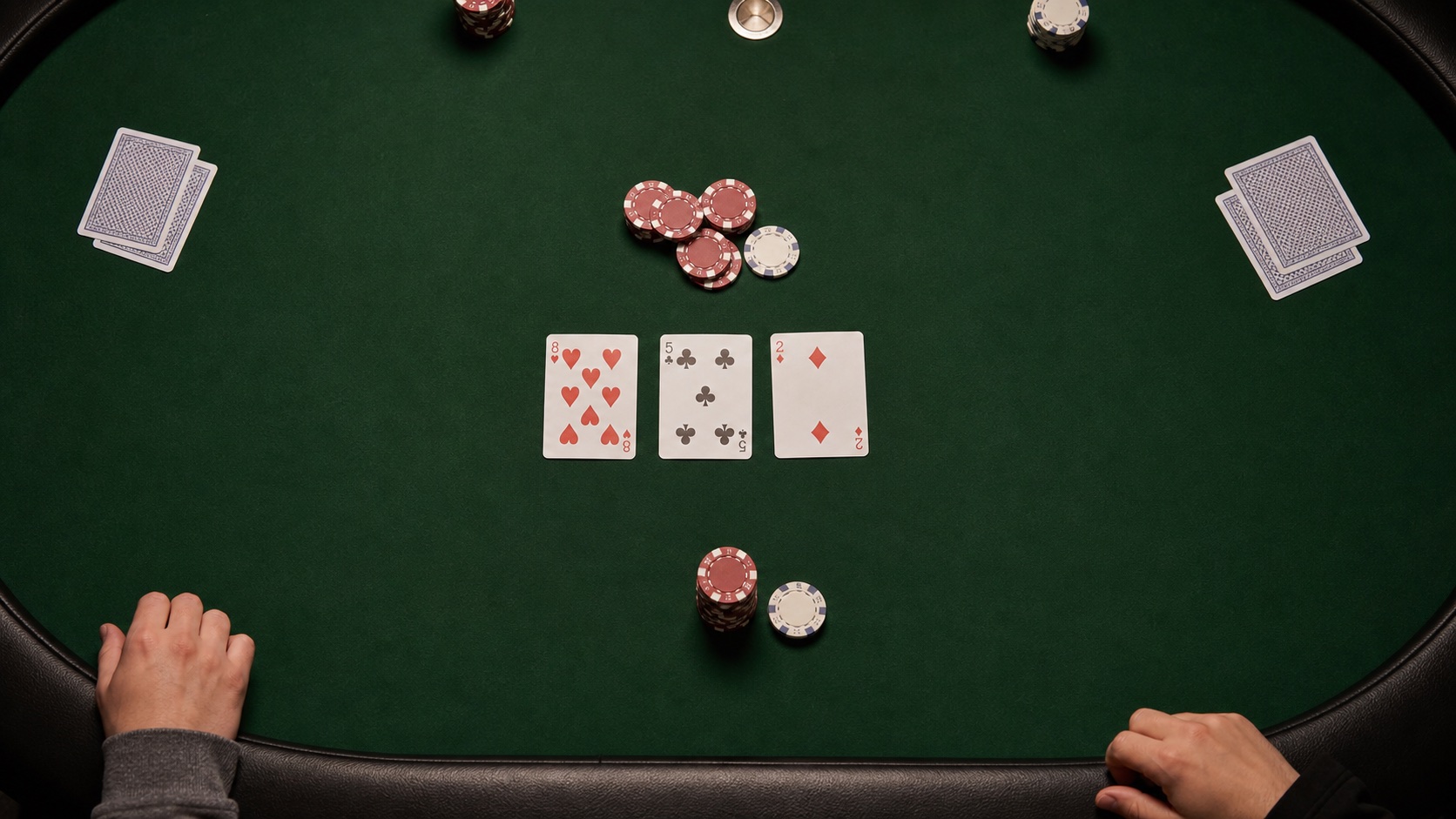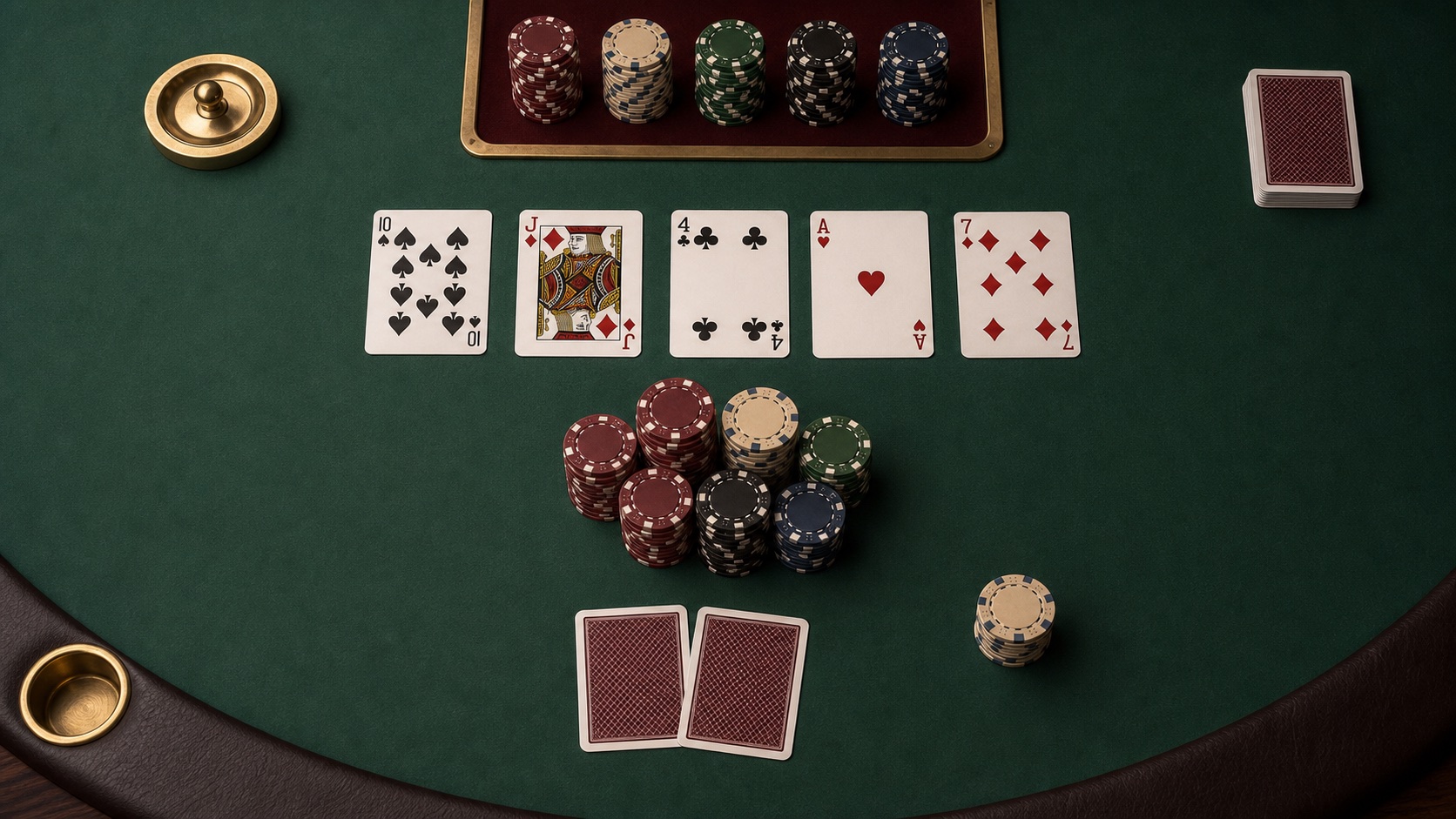
What Are Pot Odds?
Pot odds refer to the ratio of the chips you need to invest to the current size of the pot. They help you determine whether a call decision is profitable in the long run.
Simple Example
Suppose:
- The current pot is 100 yuan
- Your opponent bets 50 yuan
- The total pot is now 150 yuan
- You need to invest 50 yuan to call
Pot Odds = Amount to Invest : Amount to Win = 50 : 150 = 1 : 3
This means for every 1 yuan you invest, you could win 3 yuan.
However, 1 : 3 is not yet an equity percentage. To convert the ratio, combine the 1 part you invest with the 3 parts already available to win:
- Final pot = 1 + 3 = 4 parts
- Your call is 1 of those 4 parts
- Minimum required equity = 1 ÷ 4 = 25%
You can verify it directly with chips: 50 ÷ (150 + 50) = 25%. The 150 is the pot available before your call, and the additional 50 is the call you are about to invest.
Why Are Pot Odds Important?
Pot odds help you:
- Make mathematically sound decisions
- Avoid emotional calls
- Calculate long-term profitability
- Identify opponents' betting mistakes
How to Calculate Pot Odds?
Step 1: Calculate the Pot Available Before Your Call
Pot Before Your Call = Original Pot + Opponent's Bet + Other Players' Calls
Do not include your own call yet. Once your chips go in, the result becomes the final pot used to calculate the minimum required equity.
Step 2: Determine the Chips You Need to Invest
Amount to Invest = Opponent's Bet - Your Investment
Step 3: Calculate the Ratio
Pot Odds = Amount to Invest : Pot Before Your Call
Step 4: Convert the Ratio to Minimum Equity
If the pot-odds ratio is A : B:
Minimum required equity = A ÷ (A + B)
The denominator must include both your call A and the pot available before your call B. For example, 1 : 3 is not 1 ÷ 3; it is 1 ÷ (1 + 3) = 25%.
Example Calculations
Scenario A:
- Pot: $100
- Opponent's Bet: $50
- Amount You Need to Invest: $50
Calculation:
- Pot Before Your Call = 100 + 50 = $150
- Pot Odds = 50 : 150 = 1 : 3
Convert to Percentage:
- Final pot = 150 + your 50 call = $200
- Minimum required equity = Call ÷ Final Pot = 50 ÷ 200 = 25%
- Ratio check: 1 ÷ (1 + 3) = 1 ÷ 4 = 25%
Scenario B:
- Pot: $200
- Opponent's Bet: $100
- Amount You Need to Invest: $100
Calculation:
- Pot Before Your Call = 200 + 100 = $300
- Pot Odds = 100 : 300 = 1 : 3
- Final Pot = 300 + your 100 call = $400
- Minimum Required Equity = 100 ÷ 400 = 25%
- Ratio Check: 1 ÷ (1 + 3) = 25%
Scenario C:
- Pot: $80
- Opponent's Bet: $80 (All-in)
- Amount You Need to Invest: $80
Calculation:
- Pot Before Your Call = 80 + 80 = $160
- Pot Odds = 80 : 160 = 1 : 2
- Final Pot = 160 + your 80 call = $240
- Minimum Required Equity = 80 ÷ 240 ≈ 33.3%
- Ratio Check: 1 ÷ (1 + 2) = 1 ÷ 3 ≈ 33.3%
Card Odds
What is a Draw?
A draw refers to a situation where your hand is not yet complete and requires specific cards to finish.
Common Types of Draws:
- Flush Draw: 4 cards of the same suit, needing a 5th card
- Straight Draw: Open-ended straight draw (8 outs), gutshot straight draw (4 outs)
- Two Pair Draw: Needs a full house (4 outs)
Calculating Outs
Flush Draw:
- You have 2 spades
- The board has 2 spades
- There are 9 spades remaining
- Outs = 9
Open-Ended Straight Draw:
- Your hand: J♠ T♦
- The board: 9♥ 8♣ 2♠
- Needs: Any Q or 7
- Outs = 8 (4 Qs + 4 7s)
Converting Outs to Odds
Quick Estimation Method (2-4 Rule):
From Flop to Turn:
- Odds ≈ Outs × 2%
From Flop to River:
- Odds ≈ Outs × 4%
Exact Calculation Table:
| Outs | From Flop to Turn | From Flop to River |
|---|---|---|
| 4 | 8.5% | 16.5% |
| 8 | 17% | 31.5% |
| 9 | 19% | 35% |
| 12 | 25.5% | 45% |
| 15 | 32% | 54.1% |
Practical Applications
Case 1: Flush Draw
Situation:
- Your hole cards: A♠ K♠
- Flop: Q♠ 7♠ 3♥
- Pot: 100 yuan
- Opponent's bet: 50 yuan (all-in)
Analysis:
- You have a flush draw (9 outs)
- Pot odds: 50 : 150 = 1 : 3 (need 25% equity)
- Your equity: approximately 35% (from flop to river)
Conclusion: You can call. Because the opponent is all-in, you are guaranteed to see both the turn and river, so the roughly 35% two-card completion probability can be compared directly with the 25% calling threshold.
Case 2: Open-Ended Straight Draw
Situation:
- Your hole cards: J♦ T♥
- Flop: 9♠ 8♣ 2♠
- Pot: 80 yuan
- Opponent's bet: 80 yuan (all-in)
Analysis:
- You have an open-ended straight draw (8 outs)
- Pot odds: 80 : 160 = 1 : 2 (need 33% equity)
- Your equity: approximately 31.5% (from flop to river)
Conclusion: Fold based on the information given. The 31.5% draw probability is below the 33.3% threshold, and an all-in opponent has no chips left to provide implied odds.
Case 3: Weak Draw
Situation:
- Your hole cards: 5♥ 6♥
- Flop: 9♠ 8♠ 2♦
- Pot: 60 yuan
- Opponent's bet: 60 yuan (all-in)
Analysis:
- You only have a gutshot straight draw (4 outs)
- Pot odds: 60 : 120 = 1 : 2 (need 33% equity)
- Your equity: approximately 16.5%
Conclusion: You should fold! Your equity is far below the required equity.
Implied Odds
What Are Implied Odds?
Implied odds take into account how many chips you can win in future rounds if you hit your drawing hand.
When to Consider Implied Odds?
- Opponent Has a Deep Stack: There are more chips to win.
- Your Hand is Concealed: Opponents may not easily detect it.
- Opponent Plays Loosely: They are likely to call on later streets.
Example
Situation:
- Pot: $100
- Opponent Bet: $50
- Opponent's Remaining Chips: $200
- Your flush draw (about a 19% chance to complete on the turn)
Traditional Pot Odds:
- 50 : 150 = 1 : 3 (Requires 25% Win Rate)
- Compared with only the next card, 19% is below 25%, so the direct odds are insufficient.
Considering Implied Odds:
- If you hit, you could potentially win an additional $100-$150.
- Those possible future chips improve the implied odds.
- Whether they justify a call still depends on how often the opponent will pay, whether the outs are clean, and what happens when the turn misses.
Reverse Implied Odds
What Are Reverse Implied Odds?
This refers to situations where even if you hit your drawing hand, you may still lose more money.
Typical Scenarios
- Small Flush Draw: Opponent may have a larger flush.
- Small Straight: Opponent may have a larger straight.
- Two Pair: Opponent may already have a set or a full house.
Example
Your Hand: 5♠ 6♠
Board: A♠ K♠ 2♦
Even if you complete your flush, your opponent may have a larger flush with A♠ or K♠, and you could end up losing more money.
Common Mistakes
1. Ignoring Pot Odds
Mistake: Calling based on gut feeling without calculations
Consequence: Long-term losses
Improvement: Develop a habit of calculating
2. Overestimating Outs
Mistake: Calculating Outs without considering what opponents may already have
Example:
- You have a straight draw
- But the board has potential flush draws
- Some of your outs may complete a flush for your opponent
Improvement: Discount your Outs calculations
3. Only Considering the Current Street
Mistake: Facing a normal flop bet but using the two-card flop-to-river probability as if both remaining cards were free
Consequence: Overestimating the draw and ignoring possible turn bets
Improvement: Use the flop-to-river probability directly only when the opponent is all-in or both cards are guaranteed to be free. Otherwise, start with the next-card probability, future investment, and equity realization.
Advanced Techniques
1. Multiple Draws
When you have both a flush and a straight draw:
Example:
- Your hand: J♠ T♠
- Flop: 9♠ 8♠ 2♦
Outs:
- Flush: 9 spades (but Q♠ and 7♠ are counted twice)
- Straight: 8 outs (4 Qs + 4 7s)
- Total: About 15 outs
- Winning percentage: Approximately 54%
2. Facing Multiple Opponents
Pot odds change:
- Additional callers make the pot larger, so the direct price for a fixed call may improve.
- However, your actual equity and equity realization usually decline, and draw outs are more likely to be dirty.
- Recalculate both the pot and the opponents' ranges instead of relying on the shortcut that multi-way pots always require a higher percentage.
3. Impact of Position
In Position:
- You can gather more information before making a decision
- Implied odds are better
Out of Position:
- You need to be more conservative
- You may face a re-raise
Tools
Mental Calculation Techniques
Quickly Calculate the Equity Required to Call:
- Note the pot before the opponent bets:
P - Note the bet, which is also your call amount:
B - Final pot after you call =
P + 2B - Minimum equity required to call =
B ÷ (P + 2B)
Example:
- The pot is 100 before the bet
- Your opponent bets 50, so you must call 50
- Final pot after calling = 100 + 50 + 50 = 200
- Minimum required equity = 50 ÷ 200 = 25%
Do not rely on memorizing
1:3or3:1. Sources do not always write odds ratios in the same direction. Remembering the bet size and its required equity is clearer and less error-prone.
Bet Size, Calling Equity, and Bluff Thresholds
The direction does not matter: whether your opponent bets into you or you bet into your opponent, the same sizing creates the same theoretical threshold for the caller. The table below assumes a heads-up pot of 100 before a direct bet, with no other amount left for the caller to complete on that street:
| Bet Size | Bet Into Pot 100 | Minimum Call Equity | Pure-Bluff Fold Rate |
|---|---|---|---|
| 1/4 pot | 25 | 16.7% | 20% |
| 1/3 pot | 33 | 20% | 25% |
| 1/2 pot | 50 | 25% | 33.3% |
| 2/3 pot | 67 | 28.6% | 40% |
| 3/4 pot | 75 | 30% | 42.9% |
| Pot | 100 | 33.3% | 50% |
| 1.5x pot | 150 | 37.5% | 60% |
| 2x pot | 200 | 40% | 66.7% |
How to read the table:
- If your opponent bets half pot, your hand needs about 25% equity for a break-even call.
- If you bet half pot, your opponent also needs about 25% equity to call.
- If your bet is a pure bluff with no showdown equity, a half-pot bet must make the opponent fold more than 33.3% of the time to show an immediate profit.
The calling thresholds assume no rake, no future betting, and full equity realization. The pure-bluff thresholds assume the bettor has no equity when called. Real decisions must also account for ranges, reverse implied odds, later streets, and rake.
Summary
Pot odds form the mathematical foundation of Texas Hold'em:
- Learn to Calculate: Pot before the call, final pot, amount to call, and odds ratio
- Understand Outs: Accurately calculate the number of outs
- Convert Win Rates: Use the 2-4 rule for quick estimates
- Consider Implied Odds: Don't just look at the current pot
- Be Aware of Reverse Implied Odds: Watch out for hidden traps
By mastering pot odds, you can:
- Make mathematically sound decisions
- Identify your opponents' betting mistakes
- Enhance your long-term profitability
- Avoid emotional decision-making
Practice Recommendations
- Practice pot odds calculations in the ZenPoker training arena
- Use AI analysis tools to verify your calculations
- Review your hands, checking pot odds decisions
- Complete dedicated math exercises
Remember: Poker is not just a game of luck; it's a battle of math and strategy. Master pot odds to ensure your decisions are built on a solid mathematical foundation!