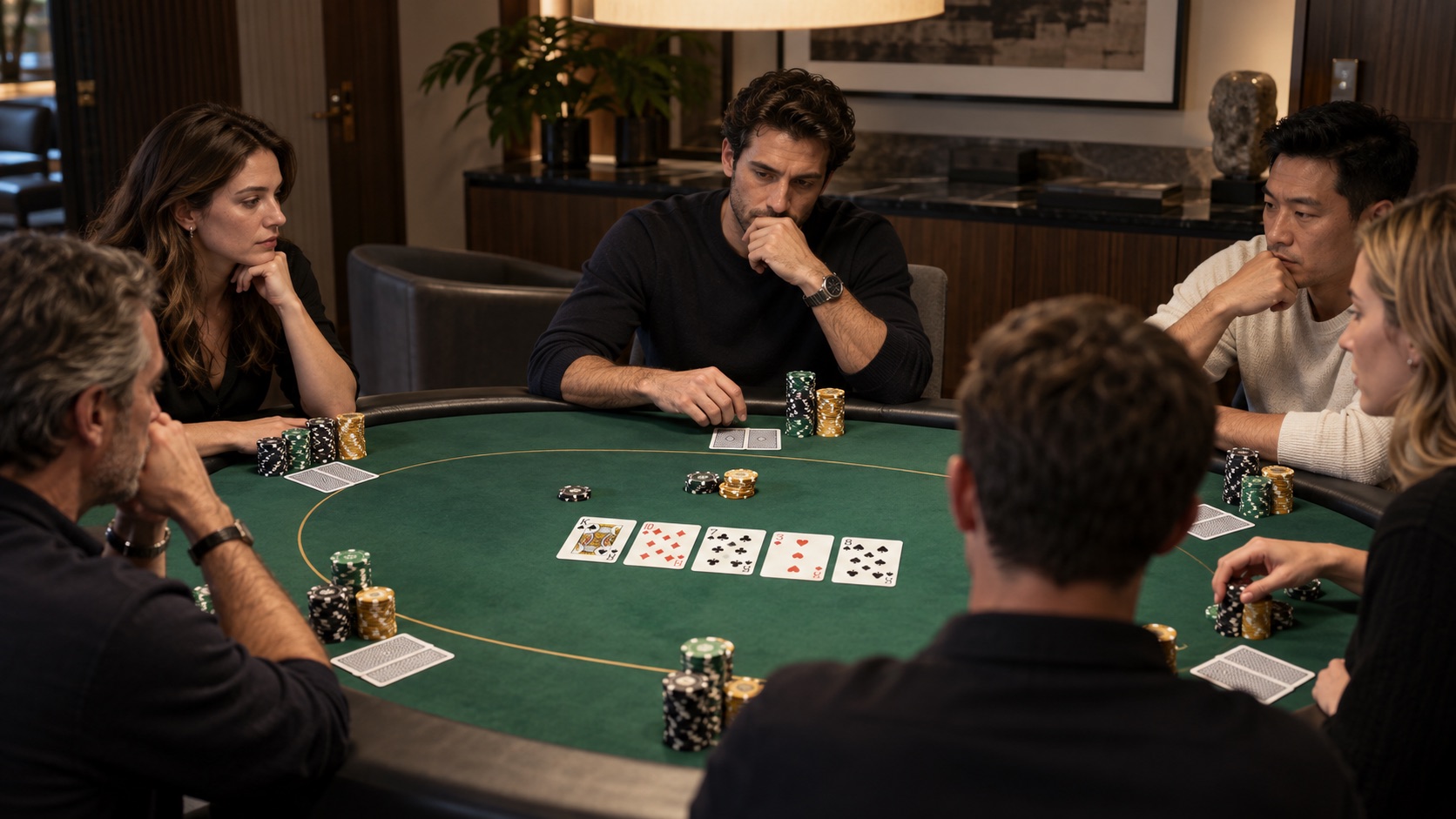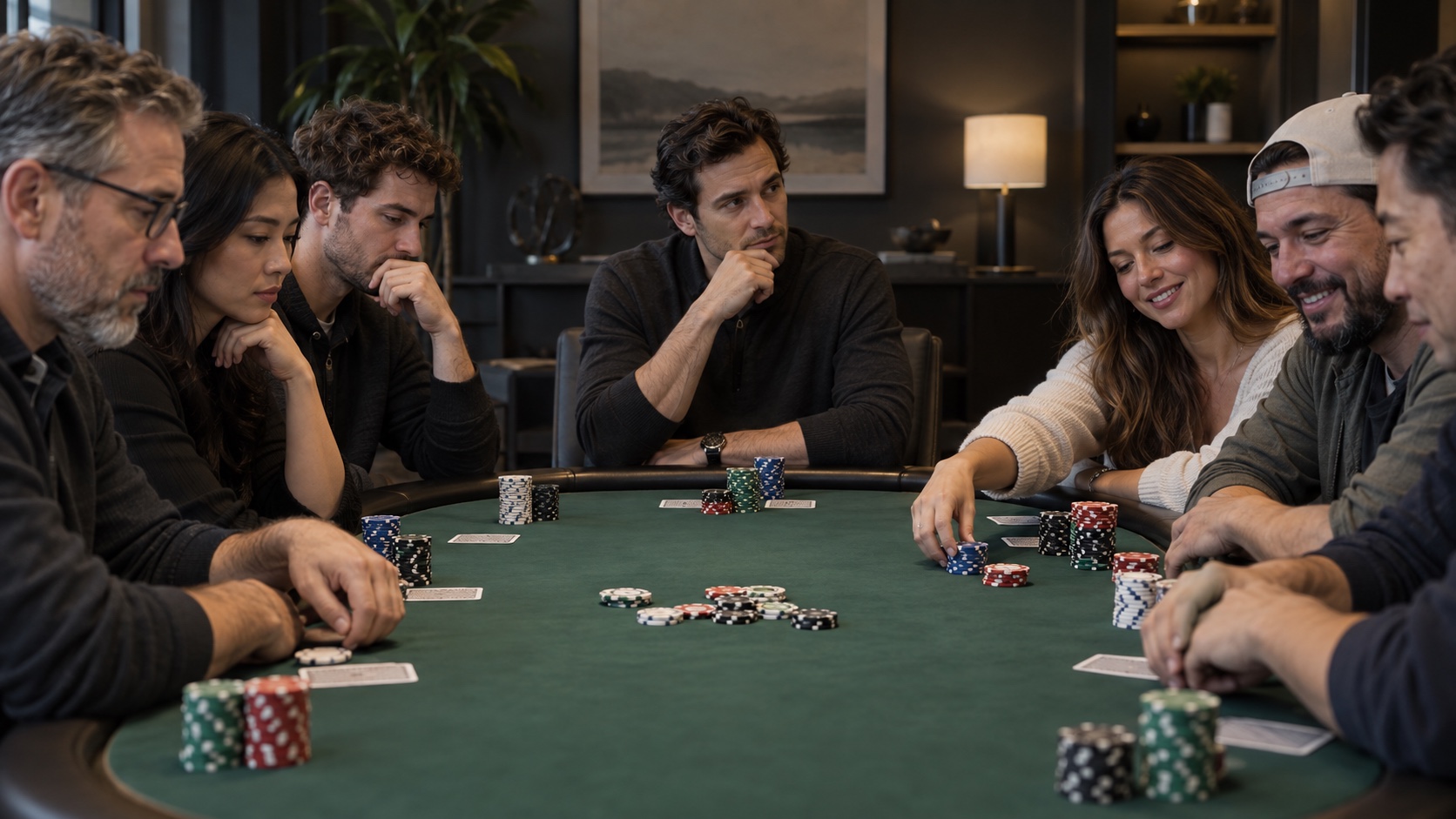
“I do not enjoy the professional games in Macau. Everyone plays too tight. Nothing happens.”
“This table is far too loose. People call with anything, so there is no way to construct a range.”
These complaints appear to describe opposite environments.
The first player dislikes opponents who are too rational. The second dislikes opponents who seem irrational. One table feels short of opportunity; the other feels short of order.
But if a player cannot tolerate either a disciplined professional game or a loose, chaotic one, the problem may not be the opponents.
How, exactly, do you want your opponents to play?
If you only feel competent when opponents follow the logic you already understand, you have not mastered the table. You have mastered one kind of table.
The Macau comment above is a player's subjective impression, not a description of every game in Macau. “Loose game” is also more useful here than the common label “fish game,” because loose play does not make another person inferior.
1. Professional and Loose Games Are Different Environments
The difference is not only how many hands people enter.
Each environment creates different mistakes, edges, and psychological pressure.
| Dimension | Professional game | Loose game |
|---|---|---|
| Common pattern | Tighter ranges, coherent sizing | Wider ranges, less standard action |
| Main test | Technical detail, patience, discipline | Value judgment, variance, adaptability |
| Common mistake | Overdefending and losing small edges repeatedly | Overvaluing hands and escalating large pots emotionally |
| Key adjustment | Protect ranges and find small deviations | Guess less, value bet clearly, simplify |
A professional game is not simply “tight,” and a loose game is not devoid of logic.
The first tends to follow strategies that are more stable and repeatable. The second is more affected by personal preference, immediate emotion, and isolated experience.
One asks whether you can find deviations inside order. The other asks whether you can preserve value inside disorder.
2. Why Professional Games Can Feel Boring
When most players understand position, ranges, price, and effective stacks, obvious mistakes become less common.
You cannot expect three streets of value every time you make a strong hand. Few opponents will willingly pay you with hands that are clearly behind. More of the edge lives in small places: one fewer unnecessary call, one well-timed steal, a more accurate size, or the discipline to end a hand when no edge remains.
The game may feel less exciting, but it keeps testing the fundamentals.
Suppose the cutoff opens and the big blind 3-bets. Your holding sits near the edge of a continuing range, and you know the opponent is generally tight. Yet you have folded for several orbits, and a thought appears: “If I fold again, they will run over me.”
The call may not reflect a strategic adjustment.
It may be boredom, pride, and the need to participate wearing the clothes of analysis.
The hardest part of a professional game is not that every opponent always has a strong hand.
It is that opponents do not donate large mistakes, and you cannot manufacture action just to prove that you exist.
Professional games test whether you can accept thin edges, slow realization, and folding as a complete part of strategy.
3. Why Loose Games Create More Tilt
Loose games appear to offer more opportunity.
Players cold-call marginal hands, ignore position, choose strange sizes, or continue simply because they want to see one more card.
More opportunity does not make every hand easier.
When ranges are wide, pots are multiway, and actions lack consistency, hand reading becomes less precise. Pots grow faster, and variance enters emotion more directly.
You bet top pair across several streets in a multiway pot. An opponent continues with a draw you never expected and improves on the river. You know the earlier calls may not have been sound, but a dangerous thought arrives:
“If he is willing to call like that, I will win those chips back in the next hand.”
Now you build larger pots with weaker hands, bluff-catch for thinner reasons, and turn “my opponent will make mistakes” into “I cannot lose.”
The greatest trap in a loose game is not that opponents abandon logic. It is that you begin to believe you no longer need logic either.
Wider opposing ranges usually call for clearer value, more care with one-pair hands, and acceptance that a sound decision can still lose the current pot. They do not mean every pot belongs to you, and they never justify chasing losses or abandoning time and financial boundaries.
4. Opposite Complaints, the Same Demand
The player who hates tight professional games is often saying:
“Why will you not give me a more obvious opportunity?”
The player who hates loose games is often saying:
“Why will you not make mistakes in the way I understand?”
The complaints are opposite on the surface but similar underneath. Both ask the environment to confirm an existing model.
When an opponent falls outside that model, emotion begins writing the explanation. Professionals become “people who only wait for cards.” Recreational players become “people who have no idea what they are doing.” Labels feel good for a moment because they move the problem back onto someone else.
Labels do not improve the next decision.
Useful questions do:
- How does this table enter and raise pots?
- How often do pots become multiway?
- Do large sizes contain enough bluffs, or are they value-heavy?
- Does my edge come from technical detail or stronger value discipline?
- Which impressions are temporary, and which have repeated evidence?
The table does not owe you familiarity.
It keeps offering facts. Your job is to update your judgment.
5. Do You Have Only One Model of Poker?
Some players leave a familiar environment and seem to lose their skill.
At a tight table, they force confrontations because value is scarce. At a loose table, they overthink because ranges are wide. They do understand poker, but they have mistaken one successful set of experiences for the natural law of every table.
Mature adaptation does not require a new personality every time you change seats.
It keeps two things true at once:
- Stable structure: position, effective stacks, price, ranges, combinations, and risk boundaries.
- Flexible real-world strategy: adjustments to opening, isolation, value thresholds, bluff frequency, and pot control based on player and Field evidence.
Only structure becomes rigid. Only flexibility loses principle.
Real poker skill is not memorizing one strategy. It is recognizing the environment, adjusting the strategy, and keeping your discipline intact.
6. GTO Is the Skeleton, Exploitation the Blade, Awareness the Spirit
The most reliable framework still has three layers.
GTO: Know What You Are Deviating From
GTO provides a baseline.
It shows where an action belongs within a complete range and prevents a few revealed hands from turning an opponent into someone who is “always tight” or “always wild.”
Exploitation: Deviation Requires Evidence
In professional games, exploitation may come from small but stable frequency errors. In loose games, it is often simpler: remove marginal bluffs, widen clear value, and distinguish heads-up pots from multiway ones.
One strange showdown is not a permanent profile. Adjustment requires a sample, time, and repeated behavior.
Awareness: Notice Who Needs the Table to Cooperate
Have you found a strategic opportunity, or are you merely impatient?
Are you bluff-catching from evidence, or trying to punish someone whose play irritates you?
Are you expanding value, or trying to reverse a recent result?
The first two layers help you decide how to play. The third helps you see who is playing right now.
7. Ask Four Questions Before You Settle Into a Game
1. How Are Pots Forming?
Are most pots heads-up or multiway? Do opens attract calls or 3-bets? On which street do pots suddenly grow?
2. What Do Large Sizes Usually Mean?
Do not conclude from one hand. Track repeated showdowns, sizes, and lines before deciding whether value or bluffs are out of balance.
3. Where Should My Edge Be Realized?
In a professional game, it may come from position, frequencies, and sizing detail. In a loose game, it may come from hand selection, value, and refusing emotional escalation.
4. Have My Decisions Begun to Distort?
When your thoughts become “I must prove it,” “I must get it back,” or “none of them can play,” pausing matters more than another range adjustment. Leaving the table remains a valid decision.
During review, do not ask only whether the hand was a call or fold. Record the table conditions, player types, effective stacks, and your emotional state. That is how you distinguish a technical mistake from an environmental misread or a break in discipline.
8. The Goal Is Not to Conquer Every Table
A professional table will not donate larger mistakes because you find it too tight.
A loose table will not follow standard ranges because you have studied them.
Poker does not train the world to become orderly. It trains you to keep revising judgment under incomplete information and changing conditions.
Strong players test your technique. Loose games test your adaptability.
A mature player does not demand that the table cooperate. First read the table, then decide how to play.
The next time you want to complain that a table is too tight or too chaotic, pause.
Do not begin with, “Why are they playing this way?”
Ask instead:
“What environment am I in, and which old answer am I still trying to use?”
Review a hand with ZenPoker and place the hand facts, Field evidence, and your emotional state side by side. Then decide whether the real adjustment belongs to technique, strategy, or yourself.