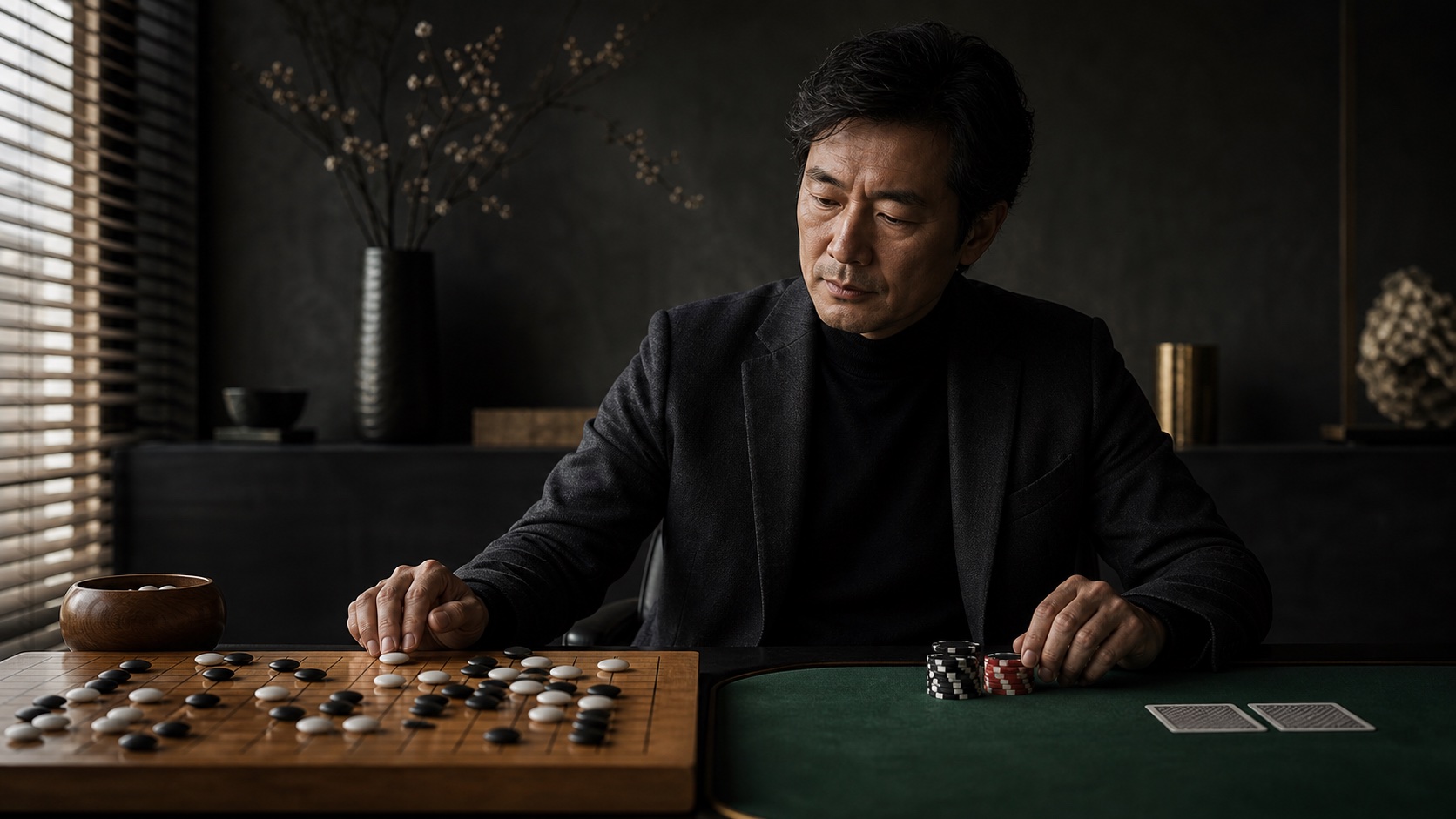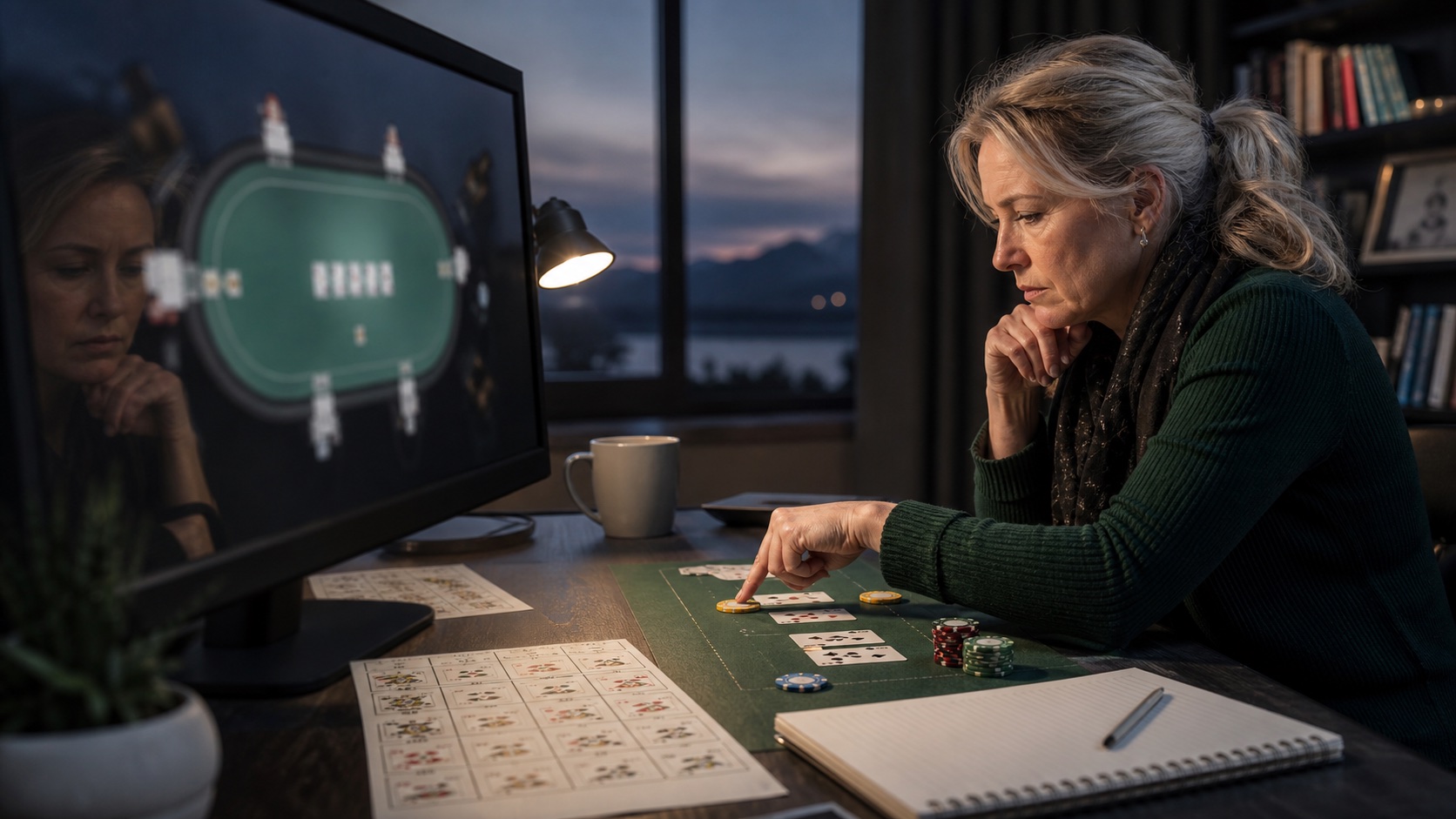
Review is not about proving you were right; it's about making fewer mistakes next time.
1. Why is Review Always the Hardest to Stick With?
Many poker players understand the importance of review.
However, very few consistently engage in it.
The reason is simple: review is uncomfortable.
When playing, we can attribute failures to bad luck, unfavorable river cards, fishy opponents, or just not being in the right mindset that day. But during a review, these excuses are peeled away layer by layer. What remains may be a glaring question:
Did I actually know I shouldn’t have played that hand this way?
This is the hardest part of reviewing.
It’s not just about organizing hand histories, taking a few solver screenshots, or retelling the results. True review involves returning to that decision-making moment and clearly examining your greed, fear, impatience, luck, and obsessions one by one.
Thus, review is not merely a technical exercise.
It is primarily a form of mental training.
II. Lee Chang-ho's Review Philosophy
Lee Chang-ho, a legendary Go player from South Korea, is a 16-time world champion, nicknamed "Stone Buddha."
What resonates most with competitive players in "Don't Be Greedy for Victory" is not just the phrase "don't be greedy," but his reverence for every game he plays.
A master doesn't stop at winning.
A master looks back.
After winning a game: Where was luck involved? Where did I actually play weakly? Where did my opponent fail to capitalize?
After losing a game: What was the true cause of defeat? At which point did I start to lose focus? Which move seemed proactive but actually strayed from the right path?
This is very similar to poker.
Many players, after winning a big pot, take it as proof of their skill. When they lose a big pot, they chalk it up to a bad beat. Thus, they swell with pride when winning and harbor resentment when losing, drifting aimlessly in the long run.
Truly skilled players do not operate this way.
They ask themselves:
- If the river card hadn’t hit, would my line still hold?
- Was my bet for value, or to prove I’m bold?
- Was my call based on range and odds, or out of a reluctance to be bluffed?
- Did I win because of high-quality decisions, or because my opponent made a mistake?
- Did I lose because of a poor decision, or because the right decision didn’t pay off this time?
Reviewing is about separating results from quality.
This is the most important line between professional players and casual players.
III. Go and Poker: Two Sides of the Same Coin
Reviewing each game of Go is akin to reviewing each hand of poker.
In Go, one seeks to identify the causes of defeat, accumulate knowledge about opponents, develop correct habits, and cultivate a stable mindset. The same applies to poker: we need to identify decision-making flaws, refine our opponent profiles, strengthen correct strategies, and become aware of our emotional patterns.
If hand histories are merely a record of events, their value is limited.
True review involves breaking down a hand to see three things:
- Situation: The positions, chip counts, ranges, board, pot, and action lines at that moment.
- Decision: Why did I bet, call, raise, or fold?
- Mindset: In that moment, was I driven by EV or by emotion?
The ten principles and strategies of Go are wisdom accumulated from long-term competitive experience.
The same holds true for poker.
If a hand is simply played and forgotten, it is merely an experience. Only through review does it transform into knowledge.
4. It's Easy to Defeat the Thief in the Mountains, but Hard to Defeat the Thief in Your Heart
Wang Yangming said: “It's easy to defeat the thief in the mountains, but hard to defeat the thief in your heart.”
The thief in the mountains represents external enemies. You can study them, surround them, and deal with them using various methods.
The thief in your heart embodies your own obsessions, fears, ego, and avoidance. Recognizing it is already difficult; overcoming it is even harder.
In poker, there are many types of thieves in your heart:
| Thief in Your Heart | Table Behavior | Questions to Ask During Review |
|---|---|---|
| Avoidance | Blaming bad luck after a loss, refusing to review | Am I seeking reasons, or making excuses? |
| Arrogance | Attributing wins to skill, blaming the cards for losses | If I lost this hand, would I still endorse this line? |
| Impatience | Rushing to recover after consecutive losses, changing strategy | Am I chasing EV, or trying to recover my emotions? |
| Fear | Hesitating to act in critical spots, regretting later | Am I being cautious, or avoiding variance? |
| Obsession | Holding on when I should fold due to sunk costs | Am I still analyzing the hand, or just unwilling to let go? |
During reviews, everyone can say afterward, “This hand should have been folded.”
The real challenge is recognizing the thief in your heart at the moment on the table and being willing to let it go.
That’s why reviewing is not just technical training.
It’s also about cultivating the mind.
5. Why is Reviewing Sometimes More Painful than Playing?
When playing, you have the table as a barrier.
You can comfort yourself with “bad luck,” explain failures with “the opponent was too crazy,” or postpone facing reality with “I'll deal with it next time.”
But reviewing has no such barriers.
Reviewing requires you to:
- Honestly acknowledge your mistakes
- Confront moments where you could have performed better
- Endure the cognitive shock of realizing “I’m not as good as I thought”
Many people don’t feel pain from losing while playing, but they do during reviews.
Because when playing, you are in action.
During reviews, you are facing the truth.
And true growth often occurs in that confrontation.
6. Without Review, Experience Becomes Illusion
Many people say: The more I play, the more I will improve.
This statement is only half true.
Without review, playing more may just lead to repeating mistakes more skillfully.
Poker is a game that easily creates illusions, as short-term results can severely distort perception:
- An incorrect all-in that wins makes you feel bold.
- A correct fold followed by an opponent's bluff makes you feel too soft.
- A thin value bet that gets raised makes you think you should avoid thin value in the future.
- A correct bluff that gets hero-called makes you feel like bluffing is useless.
Without review, results will steal your judgment standards.
You will gradually become someone who evaluates decisions solely based on wins and losses.
True training, on the other hand, is quite the opposite:
Focus on results in the short term, but on decisions in the long term.
Each review pulls your attention back from "Did I win this hand?" to "How should I have played this hand?"
This step seems simple, but it is actually counterintuitive.
Because people naturally gravitate towards results.
Results are direct, stimulating, and easy to explain. The quality of decisions, however, requires calmness, dissection, evidence, and patience.
Thus, reviewing is not meant to make you feel comfortable immediately.
Reviewing is meant to keep you clear-headed in the long run.
7. Truly Effective Review: Three Layers
Many players only look at the first layer during review: How should this hand have been played?
This is certainly important, but it’s not enough.
ZenPoker recommends dividing the review into three layers.
First Layer: Technical Layer
Is this hand reasonable in terms of range, position, SPR, bet sizing, blockers, and opponent tendencies?
You can ask:
- Was my pre-flop range too wide?
- Who has the range advantage on this board?
- What does my turn bet represent?
- What worse hands can call my river bet?
- What is the value-to-bluff ratio in my opponent's raising range?
This layer addresses: How to play the hand.
Second Layer: Strategic Layer
Does this hand align with your overall strategy?
You can ask:
- Am I being misled by a single opponent?
- Am I adjusting in the wrong way?
- Is there evidence supporting my read on this player?
- If this same spot occurred 100 times, how would I want to handle it overall?
This layer addresses: Is the system stable?
Third Layer: Psychological Layer
What was happening in my mind during this hand?
You can ask:
- When did I start to feel anxious?
- Did I want to prove something to myself?
- Am I afraid of being looked down upon for folding?
- Did I start to chase losses after losing a previous hand?
- Was I already influenced by the results before making my decision?
This layer addresses: Why did I deviate from the correct decision?
Many people only review the first two layers, so they understand the technical aspects well but still make the same mistakes in practice.
Because the root cause of errors isn’t always a lack of understanding.
Often, it’s that the mind wasn’t stable in the moment.
8. Review Winning Hands, and Review Even More
Reviewing after a loss is something everyone understands.
However, reviewing after a win reveals a player's true potential.
Losses bring pain, and pain compels reflection. Wins bring pleasure, and pleasure can lead to complacency.
Many significant downswings begin after a streak of wins.
You win several days in a row and start to feel like your reads are spot on.
You successfully over-bluff a few times and begin to believe in your pressure capabilities.
You win a big pot with a loose range and start to think the rules bend in your favor.
At this point, if you don’t review, those wins can quietly inflate your ego.
The Lee Chang-ho principle of "not being greedy for victory" doesn’t mean you don’t want to win.
It means that even after winning, you remain ungoverned by those wins.
Reviewing wins is essential to uncover the issues obscured by the results:
- This hand won, but was the line too risky?
- Did my opponent fold because I applied pressure, or were they weak to begin with?
- Did I use a line that’s not sustainable in the long run?
- Is this profit due to skill, or just good fortune in the sample?
Only those who can review in this way won’t be misled by short-term victories.
9. Reviewing is Not Self-Judgment, But Self-Training
Many people resist reviewing because they perceive it as "judgment."
When reviewing, it feels like sentencing oneself:
- I made a mistake here.
- I was too weak there.
- Why did I make that error again?
- Am I not cut out for this game?
Such reviews only create feelings of shame and do not foster growth.
A truly effective review doesn’t involve self-criticism.
Instead, it’s about observing yourself like a coach would:
- Where did I go wrong in this hand?
- Why did I think that way at the time?
- What should I prepare for next time I encounter a similar situation?
- Can I turn this mistake into a clear rule?
The goal of reviewing is not to prove your inadequacy.
The goal of reviewing is to make you increasingly reliable.
10. A Minimum Viable Review Method
If you're unsure where to start, don't aim for a complete analysis right away.
After each session, review just three hands:
- The largest pot hand
- The most emotional hand
- The most uncertain hand
For each hand, answer five questions:
1. What was the situation at the time?
2. What was my decision?
3. What was my true reasoning?
4. How would I evaluate this decision if I ignored the outcome?
5. What should I do next time I encounter a similar situation?
Pay special attention to the third question.
"True reasoning" is crucial.
It's not about the sophisticated reasons you come up with afterward, but rather what was genuinely happening in your mind at that moment.
For example:
- "I felt like he was stealing."
- "I didn't want to be pressured by him."
- "I've already invested a lot; I don't want to fold."
- "I want to win back what I've lost today."
- "I'm afraid that if I fold, I'll find out he was bluffing."
Being honest about these thoughts means your review has already begun to be effective.
Because you've finally moved beyond the surface of the hand and delved into your inner experience.
11. Why ZenPoker Focuses on Hand Recording and Quick Reviews
Many players want to review their hands, but recording them on-site can be cumbersome.
In practice, jotting down a hand in your phone's notes often looks like this:
Table: 6-max
Blinds: SB 5 / BB 10
Ante:
BBA:
Straddle:
H: CO AQo
V: SB JJ
ES: 2500
Field: Online training field
PF: V open 200, H 3b 1200, V call
F: K♠ 6♥ 8♥ H cb 1000, V call
T: 4♠ V jam, H fold
R:
SD: V win
This is very real and quite effective.
So, ZenPoker's "hand recording" and "quick review" in chat are not meant to complicate the records but to help you return to reviewing more quickly after your session.
First, capture the information:
- Table / Blinds / Ante / BBA / Straddle
- Hero / Villain / Effective Stack / Field
- Hole cards, community cards
- PF / F / T / R / SD actions
- Results and notes
Then, when you have time, bring it into AI review or your own review system.
Recording isn't the entirety of reviewing, but it is the gateway to it.
Without records, many key hands will become blurry once emotions fade.
Without review, records are just a log.
Together, they create a true growth loop:
Live play -> Quick recording -> Calm review -> Extract rules -> Execute next time
Conclusion: Only Those Willing to Review Truly Begin Playing
On the surface, poker is a game against others.
But at a certain stage, you'll realize that what truly determines your limits is your ability to continuously face yourself.
Face your greed.
Face your fear.
Face your luck.
Face the moment when you know you shouldn't, yet still press call.
Lee Chang-ho's reminder to "not covet victory" teaches us not to be swayed by wins and losses.
Wang Yangming's insight about "overcoming the thief within" reminds us that the real challenge isn't the external enemies.
And reviewing is the method to bring these two lessons to the poker table.
It's not glamorous, it's not thrilling, and it may not immediately lead to profit.
But it will gradually awaken you.
Awaken you to see the cards clearly.
Awaken you to see your opponents clearly.
More importantly, awaken you to see yourself clearly.
This is the value of reviewing.
It's not about blaming your past self, but about training your future self.