Introduction: Thanksgiving Turkeys and Losers at the Poker Table
"The Father of the Black Swan," Taleb, states:
"What is a 'Black Swan' surprise for the turkey is a definite 'White Swan' for the butcher. So, as long as you don't become that turkey, everything will be fine."
The turkey, based on its experience of being fed for the past thousand days, concludes the truth that "humans love me," unaware of the butcher's plan.
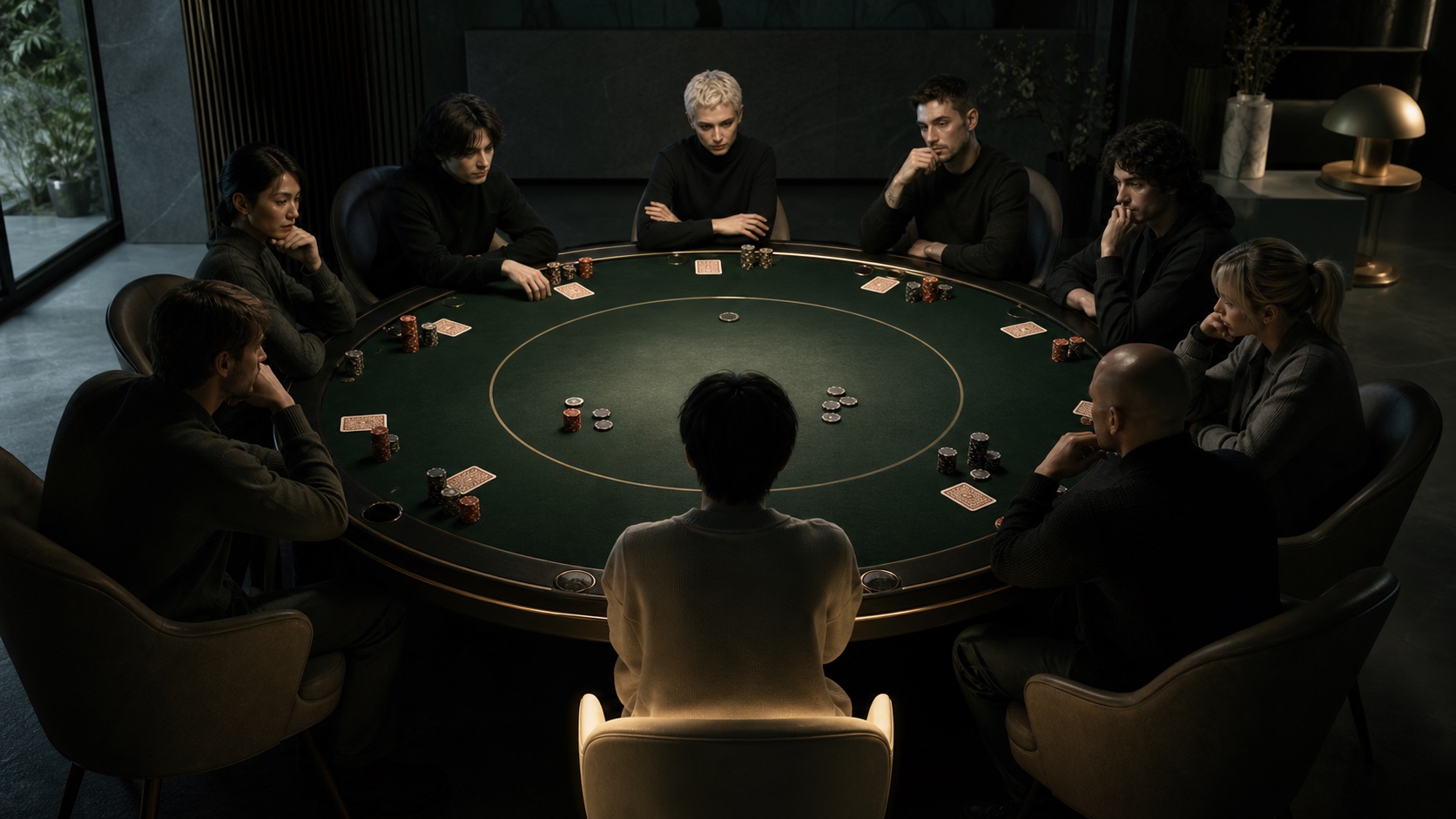
How similar is this to the situation at the poker table?
When you can't identify who the loser at the table is, you might just be that turkey waiting to be slaughtered.
I. Hume's Problem and the Uncertainty of Poker
Hume's problem may be the most significant philosophical concept:
We can never truly know what will happen tomorrow; the future may be entirely different from the past, and empiricism is logically flawed.
In poker, this issue is vividly illustrated:
The Trap of Turkey Thinking
| Inductive Reasoning | The Turkey's Conclusion | The Truth at the Table |
|---|---|---|
| "I won 10 times with AA" | "AA is a guaranteed win" | AA has only an 85% win rate |
| "My opponent never bluffs" | "If he raises, he must have a strong hand" | Opponents are adjusting their strategies |
| "I'm on a lucky streak today" | "I should keep playing" | Variance can turn at any moment |
| "I've always won from this position" | "This is my lucky spot" | Sample size is too small |
Attempting to summarize so-called patterns from limited past experiences and data to predict the future can be very dangerous.
II. Black Swans at the Poker Table
In poker, "black swan" events occur all the time:
Common Black Swans
- Bad Beat: Your AA is beaten by your opponent's 72o on the river
- Cooler: Your flush is outdone by your opponent's bigger flush
- Tilt Chain: A bad beat triggers an emotional collapse, losing your entire bankroll
- Fish Turns Shark: The "fish" you've been exploiting suddenly starts to exploit you back
Why Are We Always Caught Off Guard?
Because we, like turkeys, only see the part that is "being fed":
- Survivorship Bias: We remember the winning hands and forget the losing ones
- Confirmation Bias: We only see information that supports our judgments
- Overconfidence: Winning streaks lead us to believe we have "figured out" the table
III. 10 Iron Rules for Survival at the Table
How can you avoid becoming the turkey at the poker table?
1. Ensure Your Survival First: Bankroll Management is Paramount
In an uncertain game, survival is more important than profit.
- Don't buy in for more than 5% of your bankroll
- Set a stop-loss limit; leave when triggered
- Always keep enough to make a comeback
Bankrupt players cannot recover.
2. Don't Predict: Acknowledge Your Ignorance
Give up on predicting your opponent's "exact hand" and adopt range thinking.
- Don't say "He must have AA"
- Say "His range includes AA, KK, AK..."
- Make decisions based on probabilities, not certainties
Acknowledging your ignorance is the beginning of wisdom.
3. Build Your Ark: Establish a Systematic Strategy
We can't predict the outcome of every hand, but we can prepare responses in advance.
- Create a pre-flop range chart
- Develop strategies for various situations
- Use GTO as your decision-making "ark"
The ark is not for predicting floods, but for responding to them.
4. Maintain Redundancy: Reject the Pursuit of Maximization
Don't push every hand to the "extreme."
- Leave a safety margin
- Being appropriately conservative is not weakness
- Sometimes, folding marginal hands is wise
The function of a safety margin is to make predictions unnecessary.
5. Prepare for the Worst: Consider Extreme Scenarios
Make decisions not based on "average outcomes," but consider the "worst-case scenario."
- If I lose this hand, can I continue playing?
- If my opponent really has the nuts, can I handle it?
- What is the cost if this bluff fails?
Ask yourself: If the worst happens, can I survive?
6. Hold "Options": Stay Flexible
Don't lock yourself into a one-way street with no exit.
- Don’t reveal your intentions too early
- Keep the check-raise option available
- Maintain a balanced range
Those with options hold the initiative.
7. Asymmetric Play: Losses Have a Limit, Gains Have No Ceiling
Pursue a "small losses, big wins" trading structure.
- Use small bets to probe large pots
- Trade a certain small loss for a potentially huge uncertain gain
- A failed bluff costs one bet, but a successful one wins the entire pot
This is the essence of "asymmetry" in poker.
8. Barbell Strategy: Extremely Conservative + Extremely Aggressive
90% of hands played extremely conservatively (fold), 10% of hands played extremely aggressively (raise).
- Abandon the mediocre and high-risk middle ground
- Don’t play marginal hands just to "join the fun"
- Either don’t play, or play fiercely
Avoid the slow bleed of being boiled like a frog in warm water.
9. Focus on the Unchanging: Master Eternal Principles
The table changes, opponents change, but some things remain constant:
- Mathematics is always correct
- Position is always important
- Emotional control is always key
- Long-term EV is always the standard
Capture the unchanging amidst change, and maintain clarity in chaos.
10. Use Variance as Fuel: Grow Through Chaos
Don’t fear variance; treat it as fuel for growth.
- Bad beats are tests of your mindset
- Tough hands are training grounds for skill improvement
- Every failure is material for review
Don’t predict the storm; be the fire that benefits from it, not the candle that gets blown out.
4. From Turkey to Hunter: A Shift in Mindset
Turkey Mindset vs Hunter Mindset
| Turkey Mindset | Hunter Mindset |
|---|---|
| Past wins guarantee future wins | Past does not dictate the future |
| Striving to win every hand | Accepting short-term variance |
| Emotion-driven decisions | Probability-driven decisions |
| Passively waiting for opportunities | Actively creating opportunities |
| Blind to risks | Constantly assessing risks |
| Relying on luck | Building a system |
How to Identify if You're a Turkey?
Ask yourself a few questions:
- Can I clearly identify the losers at this table?
- Are my decisions based on probability or gut feeling?
- Do I have a preset stop-loss plan?
- Am I playing with money I can't afford to lose?
- When was the last time I admitted, "I don't know"?
If these questions make you uncomfortable, you might be playing the role of a turkey.
5. Anti-Fragile: Becoming Stronger in Uncertainty
Taleb's core idea is not to "avoid black swans," but to leverage black swans.
How to Become Anti-Fragile at the Poker Table?
- Proactively accept small losses: Use small pots to experiment and gain experience.
- Learn from bad beats: Every time you get cold-decked is an opportunity to recalibrate your judgment.
- Embrace variance: The greater the variance, the more pronounced the advantage of skilled players.
- Continuous review: Transform failures into future advantages.
If you encounter a black swan and survive, you should be grateful; your life will become more anti-fragile.
6. Conclusion: Don't Be a Turkey, Be the Butcher
The poker table is a microcosm of uncertainty.
Here, black swans occur every day.
The difference lies in whether you are the caught-off-guard turkey or the well-prepared hunter.
Remember Taleb's advice:
- Don't predict the future based on past events.
- This includes your investments, your strategies, and even your confidence.
When you begin to respect uncertainty, when you stop predicting and start preparing, when you view variance as fuel rather than an enemy—
You transform from a turkey into a true player.
Next Steps in Your Reading
- Poker is Not Gambling: The Line Between Poison and Antidote
- Winning by Not Being Greedy: How to Transition from Five Poisons to Five Blessings
- Complete Guide to Pot Odds Calculation
The Table is a Dojo · Winning by Not Being Greedy